If you’d asked me before I travelled to Madagascar what I was most excited about, I’d probably have said seeing an Indri. If you asked me now, I’d tell you it wasn’t seeing one at all, it was hearing one. My three days exploring Andasibe taught me several things. That a four to five hour drive over some of the roughest roads I’ve ever experienced in Africa can somehow pass in no time at all, simply because the ever-changing scenery outside the window never lets your attention wander. That the bathrooms in roadside restaurants call for an intrepid spirit and a good supply of hand wipes. And that the right guide doesn’t just show you Madagascar, they help you understand it. But perhaps more than anything, it reminded me that some wildlife encounters don’t need a camera.
The journey from Antananarivo takes around four to five hours, climbing steadily into the Mandraka Mountain Range, often described as the backbone of Madagascar. Before long, the city disappears behind you, replaced by enormous granite outcrops, banana trees, colourful villages and pockets of lush indigenous forest. Every now and then, the Mangoro River appears beside the road before quietly disappearing back into the forest.
One piece of practical advice: if you’re someone who suffers from travel sickness, this is definitely the journey to come prepared for. The scenery is spectacular, but the road twists and turns almost constantly, so a couple of motion sickness tablets could make all the difference.
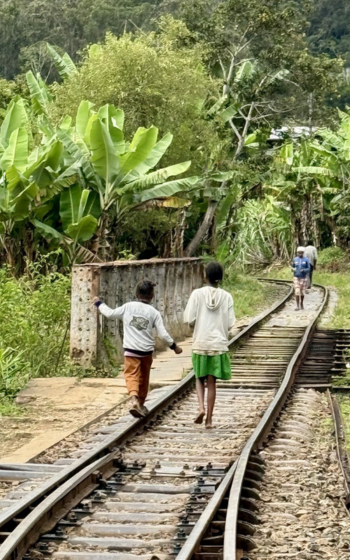
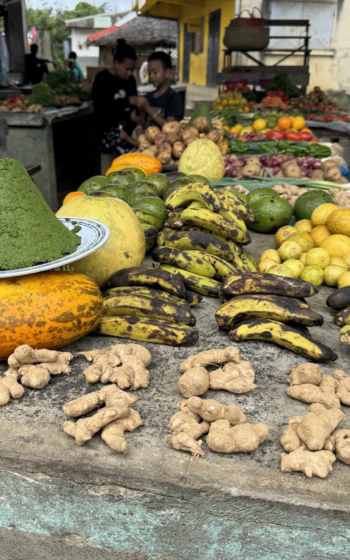
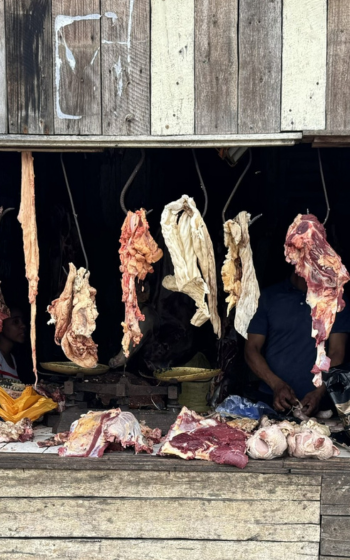
When we arrived in Andasibe, one of the first things we did was wander through the village, and I found myself just as captivated by everyday life as by the wildlife. Children were making their way home from school, and neighbours stopped to chat outside tiny roadside stalls displaying clothing alongside fresh vegetables, fish and cuts of meat. There was no sense that life had been adapted for visitors. People were simply going about their day, and we were fortunate enough to witness a small part of it. I loved how genuine it felt. It’s a real community where people live, work and raise their families, and spending time wandering its streets offered a wonderful glimpse into everyday life in Madagascar.
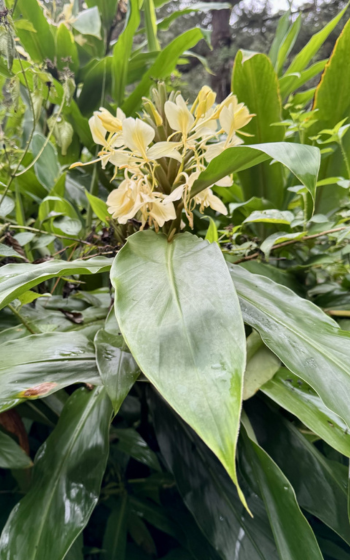
The following morning, we headed into Analamazaotra Special Reserve, the most accessible section of Andasibe-Mantadia National Park and one of the best places to encounter the remarkable Indri. Then there was our guide, Mary. Full of character, endlessly enthusiastic and guiding in Andasibe for 39 years, she came from generations of her family who had explored these forests before her. Within moments of meeting her, it was obvious that this wasn’t simply a job, it was part of who she was. She didn’t simply point out wildlife. She noticed everything. A rustle high in the canopy. A distant call that I’d never have heard. A Bird’s Nest Fern clinging to an ancient tree that, to me, looked just like every other fern until she explained how lemurs often use them as resting places and why. More than 200 species of orchid grow within these forests too, although spotting many of them requires far better eyesight than mine. Thankfully, appreciating their scent doesn’t.
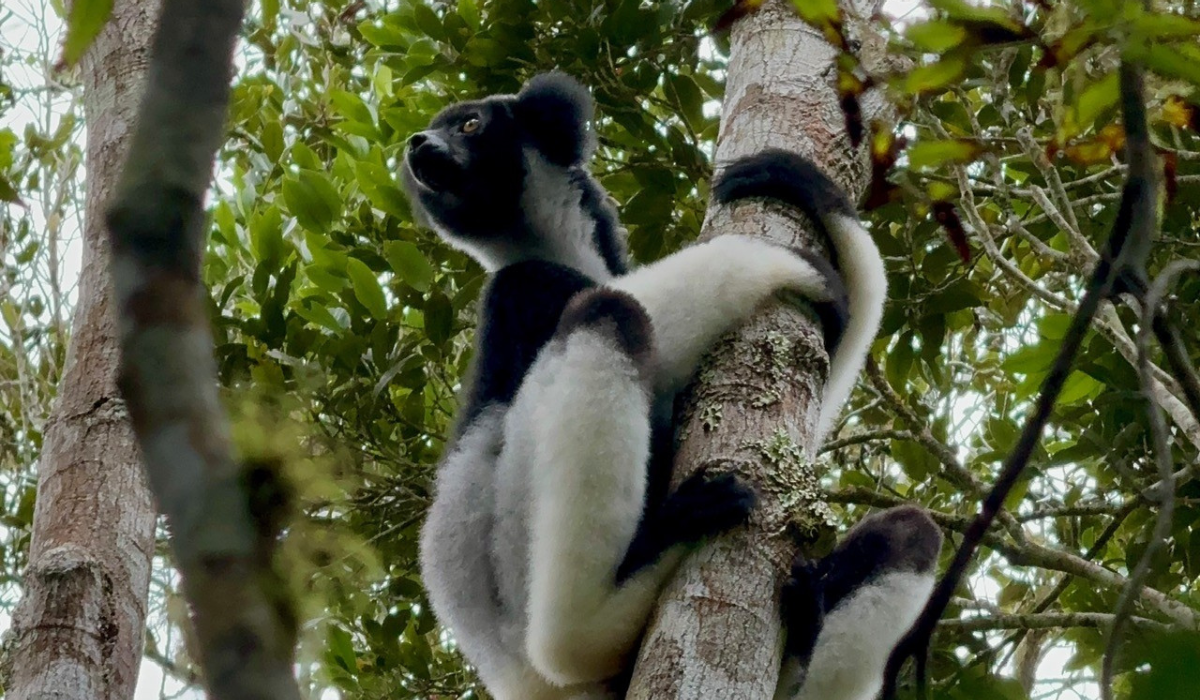
About an hour into our walk, Mary suddenly shushed us. We all stopped. Then, almost on cue, the unmistakable call of an Indri echoed through the forest. We stood completely still, listening as the sound rolled through the trees before Mary quietly led us towards the family responsible. Watching an Indri leap effortlessly through the canopy is extraordinary. Their movements seem almost impossibly graceful for such a large lemur. They’re also incredibly special, critically endangered, fiercely loyal to one partner for life and so unique that they cannot survive in captivity or simply be moved to another forest if their habitat disappears. It’s one of those moments where you instinctively lift your camera, take a couple of photographs… and then realise you’d much rather lower it again and simply stand there listening.
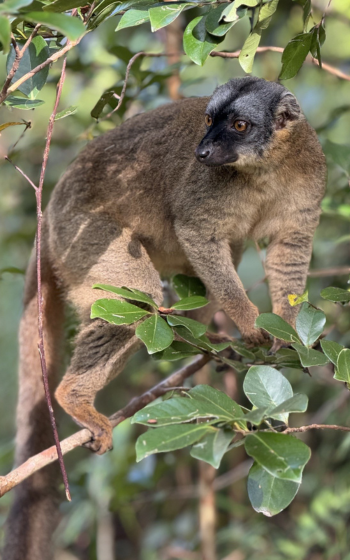
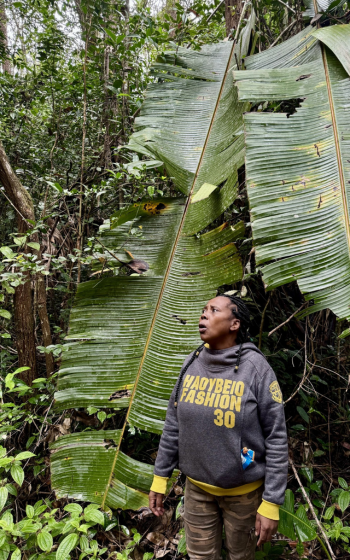
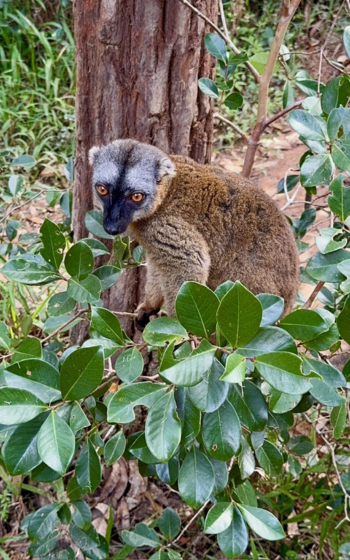
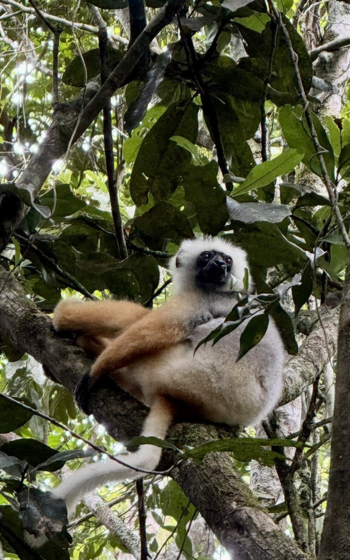
Of course, this area isn’t only about the Indri. We also spent time watching Common Brown Lemurs and the beautiful Diademed Sifaka, whose white coat and golden limbs somehow make it look permanently dressed for a special occasion. If you’re lucky, you may also spot the tiny Golden Mantella frog, another of Madagascar’s remarkable endemic species.
The forest deserves just as much attention as the wildlife. The secondary forest, where most visitors spend their time, has regenerated following historic deforestation and is noticeably easier to walk through, with eucalyptus appearing amongst the native trees. If you have the time, I’d absolutely recommend venturing into the primary forest as well. It’s around an hour and a half away over an extremely bumpy road, making it a full-day excursion, but the forest there is older, denser and wonderfully untouched.
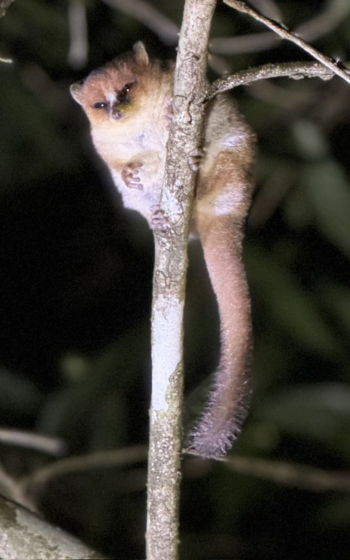
One evening we returned to the forest after dark for a community-run night walk at VOI. If the daytime forest feels alive, the night-time forest feels positively theatrical. Tiny mouse lemurs dart between branches, chameleons appear where you’d have sworn there was nothing a second earlier, frogs call from every direction and every sweep of your head torch reveals something you’d somehow managed to miss the first time. Better still, the reserve is run by the local community, meaning your visit directly supports the people who live here.
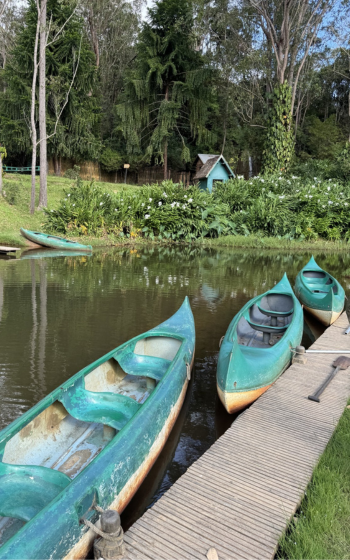
One experience from my time in this area sparked the biggest debate in my mind: Lemur Island. It’s home to rescued lemurs that can no longer be returned to the wild, along with those born on the islands, where they have plenty of space to roam. On arrival, you’re met and escorted to a canoe before being paddled across to a series of small islands, each providing a home for a different species of lemur.
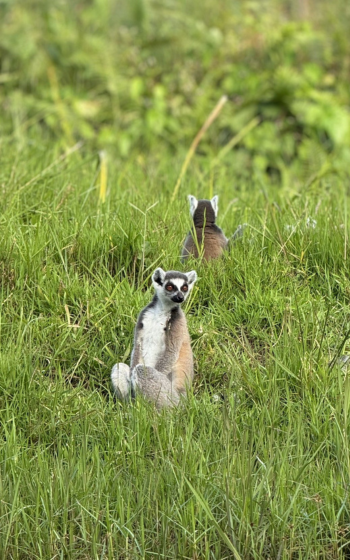
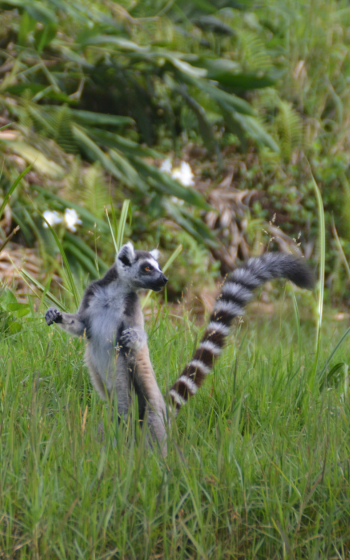
If you’ve ever dreamed of photographing Madagascar’s lemurs up close, this is almost certainly where you’ll capture some of your best images, particularly of the wonderfully expressive and cheeky Ring-tailed Lemurs, but it’s an experience I’d encourage you to approach with an open mind. For me, some moments felt incredibly special, alongside others that prompted me to pause. On occasion, food is used to encourage some of the lemurs a little closer to visitors, although they remain free to disappear back into the trees whenever they choose, and visitors aren’t allowed to wander on the islands themselves. I left with a genuine appreciation for what the reserve is trying to achieve and the care being given to animals that can no longer survive in the wild. At the same time, it was undoubtedly the most visitor-focused wildlife experience of my time in Madagascar, reminding me just how much I value encountering wildlife entirely on its own terms.
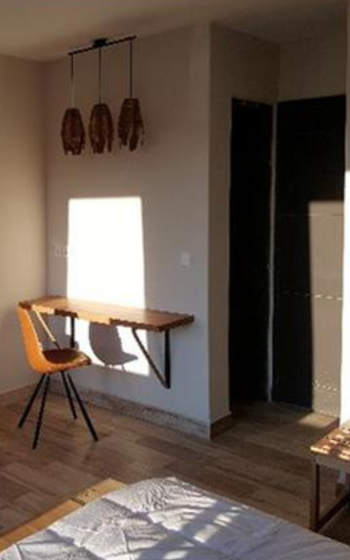
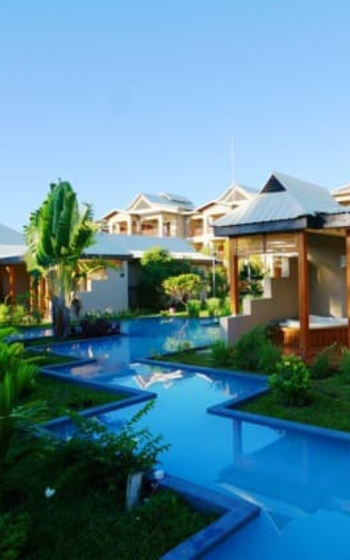
Over my three days, I also had the opportunity to explore both Mantadia Lodge and Manjarano. They’re very different in style, but I liked both for different reasons.
Mantadia Lodge has a fresh, almost Scandinavian design, with light interiors and large windows that make the most of its spectacular position overlooking the rainforest. It’s slightly closer to the village than some of the other lodges, so if you’re staying over a weekend, you may occasionally hear children playing or music drifting up the hillside. Personally, I thought that added to the atmosphere far more than it detracted from it, but it is important to keep this in mind.
Manjarano offered something completely different. The main areas are more spacious and can feel a little sparse at times, but it’s the property’s position that I really liked. Tucked beside the forest, it feels wonderfully peaceful and, as darkness falls, the chorus of frogs, insects and distant calls from the surrounding rainforest becomes part of the experience. I found myself making excuses not to go to bed, simply so I could sit on the terrace and listen a little longer.
If you’re planning a trip, I’d recommend allowing at least three nights in Andasibe, longer if you’re particularly interested in birds, orchids or Madagascar’s remarkable flora. This is one destination that rewards patience. Take the photographs, you’ll undoubtedly want to, and they’re wonderful to look back on. But every now and then, put the camera down and simply listen.
Years from now, I don’t think it’ll be my slightly wonky photographs that I’ll remember most. It’ll be standing quietly in the rainforest, listening to the unmistakable call of an Indri somewhere high in the trees.